 Zyrox
ZyroxHow to Spot Fake or Misleading Hardware Reviews
Learn how to separate genuine hardware testing from marketing language, cherry-picked benchmarks, paid promotions, and weak comparisons.
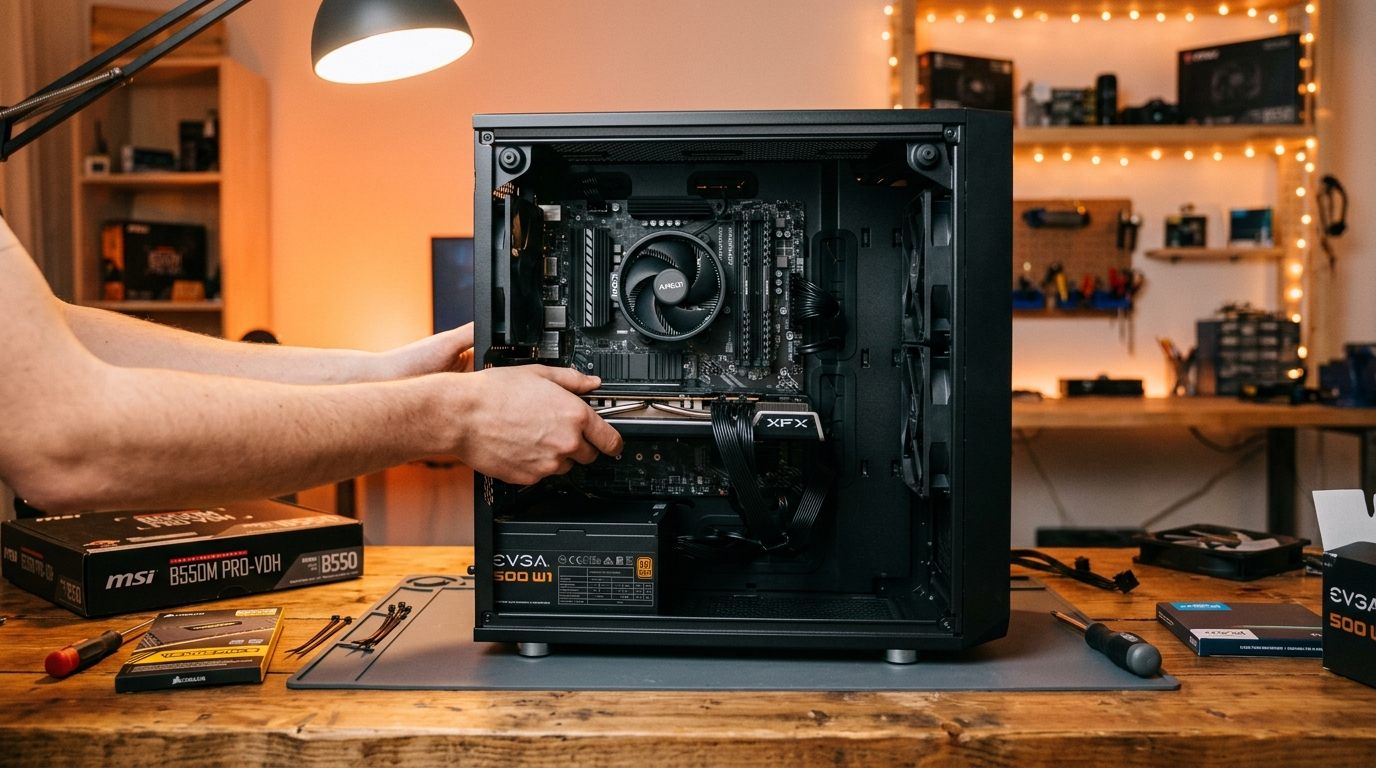 I've been reading hardware reviews professionally for over a decade. In that time I've bought components based on reviews that turned out to be misleading — not because they lied outright, but because they omitted exactly the context that would have changed my decision. A CPU cooler that looked like a winner in one reviewer's setup turned out to be mediocre in my case configuration. A GPU that dominated gaming benchmarks on one publication's test bench underperformed in the workloads I actually cared about.
After getting burned a few times, I stopped just reading conclusions and started studying how reviews are constructed. The result is a personal checklist I apply before trusting any piece of hardware advice. I want to share that checklist here in full — because knowing what good methodology looks like is the only reliable way to filter out the bad.
Why Hardware Reviews Can Be Misleading
Before getting into detection methods, it's worth understanding the incentive structure. Most hardware review sites earn revenue through affiliate commissions, display advertising, or both. That isn't inherently a problem — strong editorial journalism can and does coexist with those business models. But the pressure is real. A site that depends heavily on Amazon affiliate commissions has a financial reason to push readers toward purchases. A site that receives early review samples from manufacturers has a relationship it may not want to damage with consistently critical coverage.
None of this means a review is automatically compromised. It means you need to read it critically, with those incentives in mind.
Methodology Transparency Checklist
The single most reliable indicator of review quality is whether the author tells you exactly how they tested the product. A review that discloses its method can be evaluated and challenged. A review that doesn't is asking you to trust a black box.
A properly transparent review explicitly lists the full test bench specs, including the CPU, RAM, motherboard, and OS, because results shift significantly based on the platform. It lists the driver and BIOS versions used, preventing the data from being rendered useless by outdated software.
For thermal testing, it discloses the ambient temperature, the specific thermal paste brand, the application method, and the fan curve settings (auto vs. fixed RPM). It also notes the thermal soak time between runs, because rushed tests consistently favor the hardware being reviewed rather than revealing its sustained performance.
If a review doesn't list the test bench CPU and RAM in the first few paragraphs, treat every number in it as illustrative rather than definitive.
Cherry-Picked Benchmarks: How to Recognize Them
Cherry-picking is the most pervasive form of misleading review content. A reviewer runs a dozen tests, highlights the three where the product performs best, and buries the rest. Everything shown is technically accurate, but the picture is incomplete in a way that systematically favors the product.
A massive red flag is a single workload focus. A CPU review that only shows gaming FPS while skipping rendering and compression workloads is hiding the full picture. A storage review that only highlights sequential read speeds while ignoring random read latency is essentially just reprinting marketing materials.
Lack of comparative context is just as bad. A GPU hitting 120 FPS means nothing unless you know what the competing product scored and what each one costs.
Always verify that the benchmark charts include direct competitors. Ensure there are results across synthetic, real-world, and mixed-use workloads. Check if the reviewer addresses scenarios where the product performed poorly, and for GPUs, make sure multiple game engines and APIs are represented. GamersNexus sets the gold standard here by highlighting flaws and underperformance just as prominently as successes.
Affiliate Link Disclosure and Conflict of Interest
In many regions, reviewers are legally required to disclose when they earn a commission from a product recommendation. A disclosure doesn't make a review untrustworthy — it's simply honesty. What raises concern is the absence of clear disclosure when affiliate links clearly exist on the page. Look for disclosures clearly visible at the top of the article, rather than buried in a footer.
A more serious conflict arises when a review site also sells the hardware it reviews, which is common with some European tech sites. In those cases, the reviewer's employer has a direct financial interest in driving purchases. This conflict is built into their business model and should inform how much weight you give to their conclusions.
PR Sample Bias: Review Units vs. Retail Stock
When a manufacturer ships a review unit, they control which specific unit ships. This creates the possibility of sending "binned" or specially selected units that outperform typical retail stock. Both major CPU and GPU manufacturers have, in the past, shipped review kits that ran at slightly elevated frequencies or featured slightly better cooling than the versions sold to consumers.
Look for reviews that explicitly note whether the unit was provided by the manufacturer or purchased at retail. The best publications, like GamersNexus, regularly purchase their own retail units alongside manufacturer samples to cross-verify, publishing the comparisons when discrepancies appear.
Publications to Trust — and Why
Not all hardware media operates to the same standard. GamersNexus represents the most rigorously methodical consumer hardware coverage available today, regularly buying retail samples and publishing full bench specifications.
Tom's Hardware offers excellent long-form written reviews and maintains a highly useful CPU and GPU hierarchy page for quick comparative context.
Hardware Unboxed is particularly strong for monitor and GPU reviews, with detailed, reproducible methodologies.
For console hardware analysis and PC game performance optimization, Digital Foundry's technical breakdowns are unmatched.
Finally, for workstation and creative professional workloads, Puget Systems' real-world testing in applications like Premiere Pro and Blender reflects how hardware actually performs in professional environments, not just in synthetic benchmarks.
Review Sites to Approach Skeptically
You should increase your skepticism when you see publications posting reviews within 24 hours of an embargo lift with only a handful of benchmark charts. Be wary of sites whose reviews consistently conclude with "great value, highly recommended" regardless of the actual product tier.
Avoid sites where every "best of" article links exclusively to affiliate partners, or reviews that completely fail to disclose their test bench. Also, treat YouTube channels that label simple unboxing videos as "reviews" — with no thermal or load testing — as pure entertainment, not buying advice.
A great practical test is to search for a product with a widely acknowledged flaw (like a GPU known for aggressive throttling) on a site you are evaluating. If they failed to mention the known issue, their editorial standards are lacking.
How to Cross-Reference Three or More Sources
The safest approach to any significant purchase is cross-referencing. Start with a methodology-first source like GamersNexus or Tom's Hardware to get the baseline performance figures.
Then, find a second independent source like Hardware Unboxed to verify the data. Results should be within about 5 percent of each other; anything more drastic is a red flag.
Third, consult non-review sources like r/hardware or verified purchase reviews from users with similar use cases to yours. These reveal long-term reliability patterns that formal day-one reviews miss. If the sources agree, you have a solid signal. If they diverge wildly, hold off on buying until you figure out why.
YouTube vs. Written Reviews: Trade-Offs
Both formats have their place. YouTube reviews from top creators are excellent for visual demonstrations, thermal camera footage, and physical teardowns. They make complex explanations easy to follow verbally. However, they inherently compress data, showing far fewer benchmark charts than a written review.
Written reviews are scannable, highly detailed, and much easier to reference when you are comparing specific numbers. I use YouTube to understand physical build quality and general impressions, and I rely on written reviews to verify the specific data points I base my purchasing decisions on.
Day-One Embargo Reviews vs. Long-Term Testing
Reviews published the moment a press embargo lifts are timely, but limited. The reviewer has only had the hardware for a week or two, often running pre-release drivers.
Over the following weeks, GPU driver updates can substantially alter performance. BIOS updates shift power limits. Manufacturing lot variations become apparent. If you're buying a product on launch day, you are accepting that the review data is incomplete. For controversial or mixed-impression launches, wait 30 to 60 days for follow-up testing and revisit reviews that capture the mature state of the hardware.
Amazon Verified Purchase Reviews: Filtering the Noise
Amazon reviews can provide real-world context, but they are heavily manipulated. Watch out for dozens of 5-star reviews posted within a 48-hour window, generic praise with no specifics, or identical phrasing across multiple reviews.
The most useful Amazon reviews are from verified buyers who describe their specific use case, detail a limitation or failure, and write more than just a few sentences. If you see a cluster of detailed negative reviews appearing 12 to 18 months after a product launches, treat that as a massive reliability red flag, regardless of what the overall star rating says.
Related Guides
← Back to home